


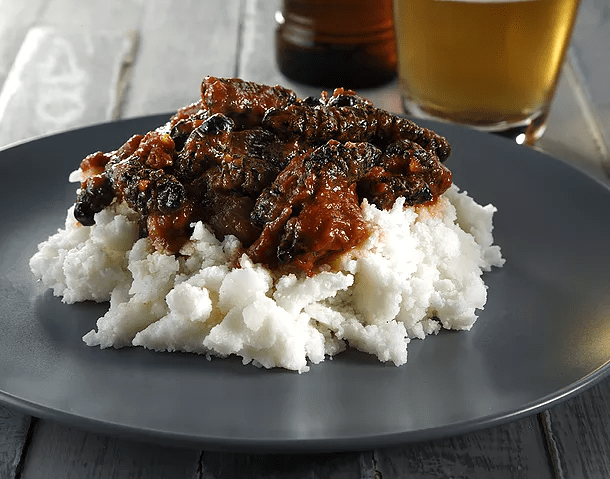
The Venda people, hailing from the lush landscapes of Limpopo Province in South Africa, boast a rich culinary heritage deeply rooted in their connection to the land. Traditional Venda cuisine emphasizes seasonal, locally sourced ingredients, with dishes often centered around maize, sorghum, leafy greens, and protein sources like fish, goat, and an intriguing delicacy: Mashonzha, or mopane worms. These caterpillars, harvested from mopane trees, are not only a nutritional staple but also a cultural symbol, reflecting the community’s resourcefulness and respect for nature.
What is Mashonzha?
Mashonzha refers to the larvae of the emperor moth (Gonimbrasia belina), which thrive on mopane trees. These protein-rich caterpillars are a seasonal harvest, collected during summer months when they fatten on mopane leaves. While consumed across Southern Africa, the Venda have perfected unique preparation methods, making Mashonzha a distinctive element of their gastronomy.
Harvesting and Preparation
Harvesting Mashonzha is a communal activity, often led by women and children. The caterpillars are handpicked, their innards squeezed out, and then dried in the sun or smoked for preservation. This process imparts a smoky flavor and allows storage for months. To prepare, dried Mashonzha are rehydrated and boiled, then sautéed with onions, tomatoes, garlic, and chili, creating a savory relish. Some families add peanut butter or serve it with pap (maize porridge), balancing textures and flavors.
Nutritional Powerhouse
Mashonzha is lauded for its nutritional value. Rich in protein (up to 60%), iron, calcium, and essential amino acids, it rivals conventional meats. For rural communities, it provides an affordable, sustainable protein source, crucial in regions with limited access to livestock.
Cultural Significance
Beyond sustenance, Mashonzha holds cultural resonance. It features in rituals and celebrations, symbolizing abundance and resilience. Elders share harvesting knowledge with youth, reinforcing intergenerational bonds. During initiations or weddings, Mashonzha dishes signify hospitality and heritage. While not taboo, its preparation is a revered skill, often passed down through matriarchal lines.
Mashonzha in Modern Times
Today, Mashonzha bridges tradition and modernity. In urban markets, it’s sold dried or canned, catering to diaspora communities. Chefs in upscale restaurants reimagine it as a gourmet ingredient, served crispy with avant-garde sauces. Environmentalists champion its low ecological footprint, noting that sustainable harvesting supports biodiversity. However, climate change and overharvesting pose challenges, prompting calls for regulated practices to protect moth populations.
Mashonzha embodies the Venda people’s ingenuity and adaptability. From sun-dried delicacies to contemporary cuisine, it remains a testament to cultural pride and ecological harmony. As global interest in sustainable foods grows, Mashonzha stands out—not merely as a culinary curiosity, but as a legacy of resilience, inviting the world to appreciate the depth of Venda tradition.


