


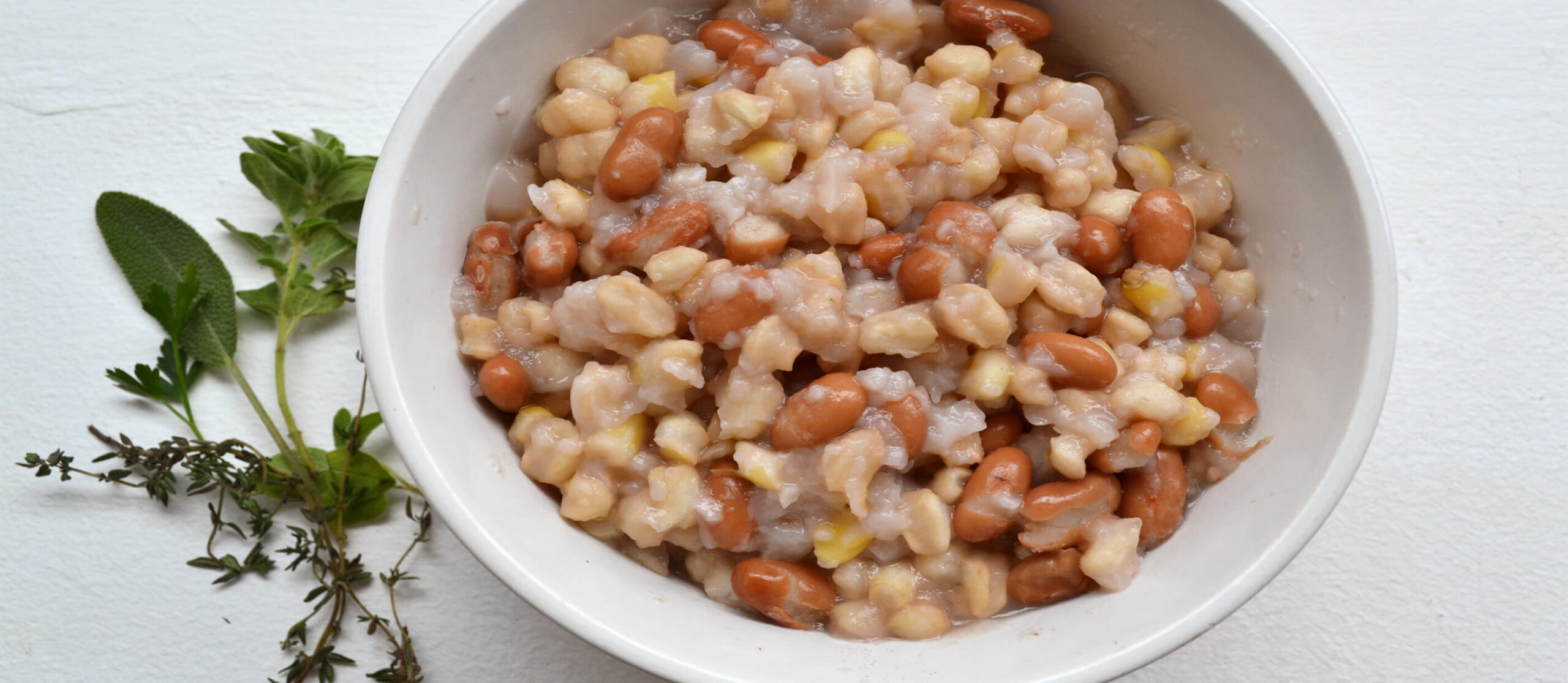
Nyekoe is a traditional Sotho dish originating from Lesotho, a landlocked country in Southern Africa. This hearty vegetarian stew combines beans, sorghum, and pumpkin, offering a nutritious and flavourful meal.
Ingredients and Preparation
The primary ingredients for nyekoe include:
- Beans: Typically dried beans such as kidney or pinto beans.
- Sorghum: A cereal grain that adds a nutty flavor and texture.
- Pumpkin: Adds sweetness and richness to the stew.
- Oil: Used for sautéing and adding richness.
- Salt and pepper: For seasoning.
To prepare nyekoe, beans are soaked overnight to soften. The next day, they are cooked with sorghum until both are tender. Small pieces of pumpkin are then added, along with oil and seasonings. The mixture is slightly mashed to achieve the desired consistency. This stew can be served hot or cold and is traditionally prepared in large black cauldrons, especially during the winter months.
Cultural Significance
Nyekoe holds a special place in Sotho culture. It is often prepared during colder seasons and is commonly sold by street vendors in Lesotho. The dish reflects the agricultural practices of the region, utilising locally grown ingredients like beans, sorghum, and pumpkin.
Variations
While the basic recipe remains consistent, variations of nyekoe exist. Some recipes include additional ingredients such as wheat or other vegetables. The stew’s consistency can also vary, with some preferring a chunkier texture while others opt for a smoother one.
Nyekoe is more than just a meal; it is a reflection of the Sotho people’s heritage and culinary traditions. Its simple yet flavourful combination of beans, sorghum, and pumpkin makes it a cherished dish in Lesotho and among Sotho communities.


