


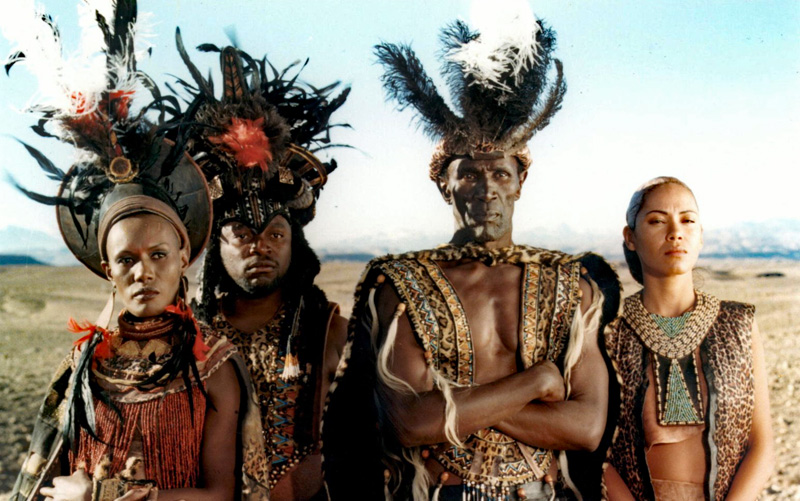
Sigidi kaSenzangakhona, commonly known as Shaka, emerged as a formidable Zulu king and conqueror, leaving an indelible mark on the history of southeast Africa. His reign witnessed the consolidation of over a hundred chiefdoms into the powerful Zulu kingdom, enduring even beyond his death and facing subsequent challenges.
Born to Senzangakhona, ruler of the modest Zulu chiefdom, and Nandi, the daughter of a Langeni chief, Shaka’s early life was marked by controversy and hardship. Raised in the Langeni territory, he faced mistreatment and bullying, eventually finding refuge among the Mthethwa people led by Chief Dingiswayo.
Shaka’s transformation began in the Mthethwa army, where he honed his skills and rose through the ranks, earning the name Nodumehlezi. Following the death of his father, Shaka seized power, with Dingiswayo’s support, eliminating rivals and expanding the Zulu chiefdom. Dingiswayo’s demise marked the transition of leadership to Shaka, who embarked on a series of conquests, culminating in the defeat of the Ndwandwe and the establishment of Zulu supremacy.
Shaka’s military reforms were instrumental in shaping the Zulu forces. He introduced a new style of warfare, discarding traditional long-handled assegais for short-handled stabbing spears. The Zulu military adopted disciplined formations, including the renowned crescent-shaped arrangement, and underwent rigorous training. Shaka’s leadership fostered a sense of identity and unity among the Zulu people.
The Zulu military system extended beyond the battlefield to societal organization. Shaka implemented age-regiments, both for men and women, creating distinct communities with specific roles. Royal women, often led by Shaka’s aunts, held administrative authority in his absence. Shaka’s reign witnessed economic and social transformations, concentrating youth in military settlements and centralizing economic potential.
While Shaka’s military prowess expanded the Zulu kingdom, it came at a significant cost. His wars led to mass migrations, creating chaos and destruction across southern Africa. The period between 1818 and 1828, known as the Mfecane, witnessed forced migrations, extermination of populations, and the rise of new kingdoms.
Shaka’s interactions with white traders at Port Natal showcased his curiosity about technology and warfare. Despite being characterized as a cruel tyrant, Shaka accorded favorable treatment to the traders, allowing them to establish a settlement. His death in 1828 marked the end of an era, leaving a profound impact on the subsequent Zulu monarchs.
In conclusion, Shaka’s legacy remains complex, marked by military brilliance, societal reforms, and the socio-economic consequences of his conquests. The Zulu kingdom, shaped during his reign, continued to influence the course of South African history under his successors.


