


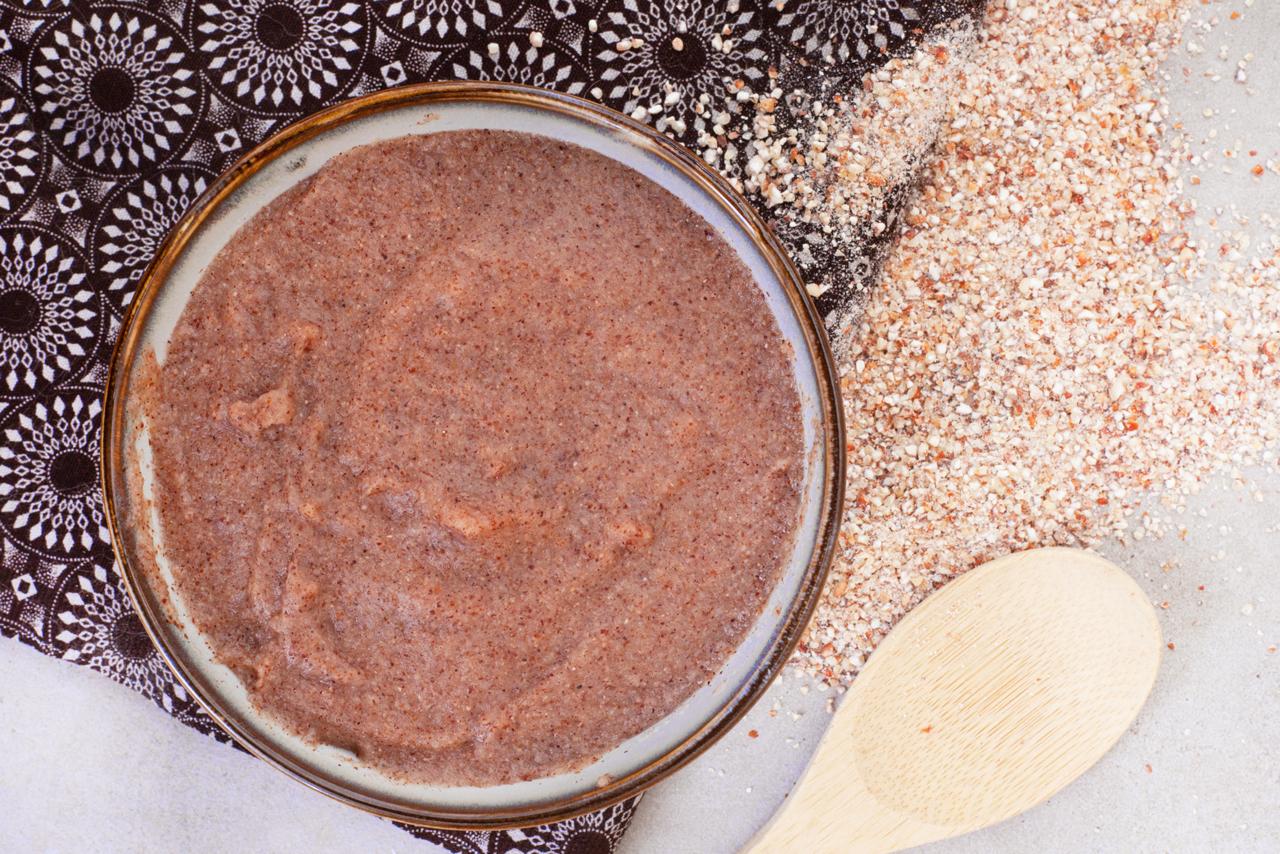
Ting ya mabele, a cherished traditional fermented sorghum product originating from the Tswana community in Botswana and the northern regions of South Africa, particularly the North West province, holds deep cultural significance. In Tswana culture, “ting” denotes fermented porridge, and “mabele” signifies sorghum meal, the primary raw material for crafting ting. This time-honoured practice of fermenting sorghum meal dates back over 4,000 years, serving as a vital preservation method in the absence of refrigeration technology.
The preparation of ting ya mabele involves mixing sorghum meal with warm water, typically boiled water that has partially cooled. This mixture is then left to ferment in a sealed container for 2-3 days, with lactic acid bacteria playing a pivotal role in the fermentation process. The presence of bubbles signifies the initiation of fermentation, and the ting is deemed ready once its aroma turns “bitter.” Subsequently, the ting is cooked with water, salt, and occasionally a small quantity of maize meal to create a flavorful porridge.
To prevent the formation of lumps, the porridge must be stirred regularly during the cooking process. Depending on the desired consistency, the ting can be cooked longer with less water to achieve a thick porridge known as bogobe. On the other hand, a thinner porridge called motogo, popular among children, is made by diluting the ting more heavily and cooking it for a shorter duration. Both bogobe and motogo are versatile dishes suitable for any time of the day.
To prevent leftover ting from over-fermenting and spoiling, it can be mixed with a new batch in the same container. Ting ya mabele is often served alongside a variety of meat, fish, and vegetable dishes. Beyond its cultural significance, ting ya mabele is renowned for its nutritional benefits, boasting high levels of antioxidants and promoting digestive health. Furthermore, it stands out as an excellent dietary choice for individuals with gluten intolerance.


