


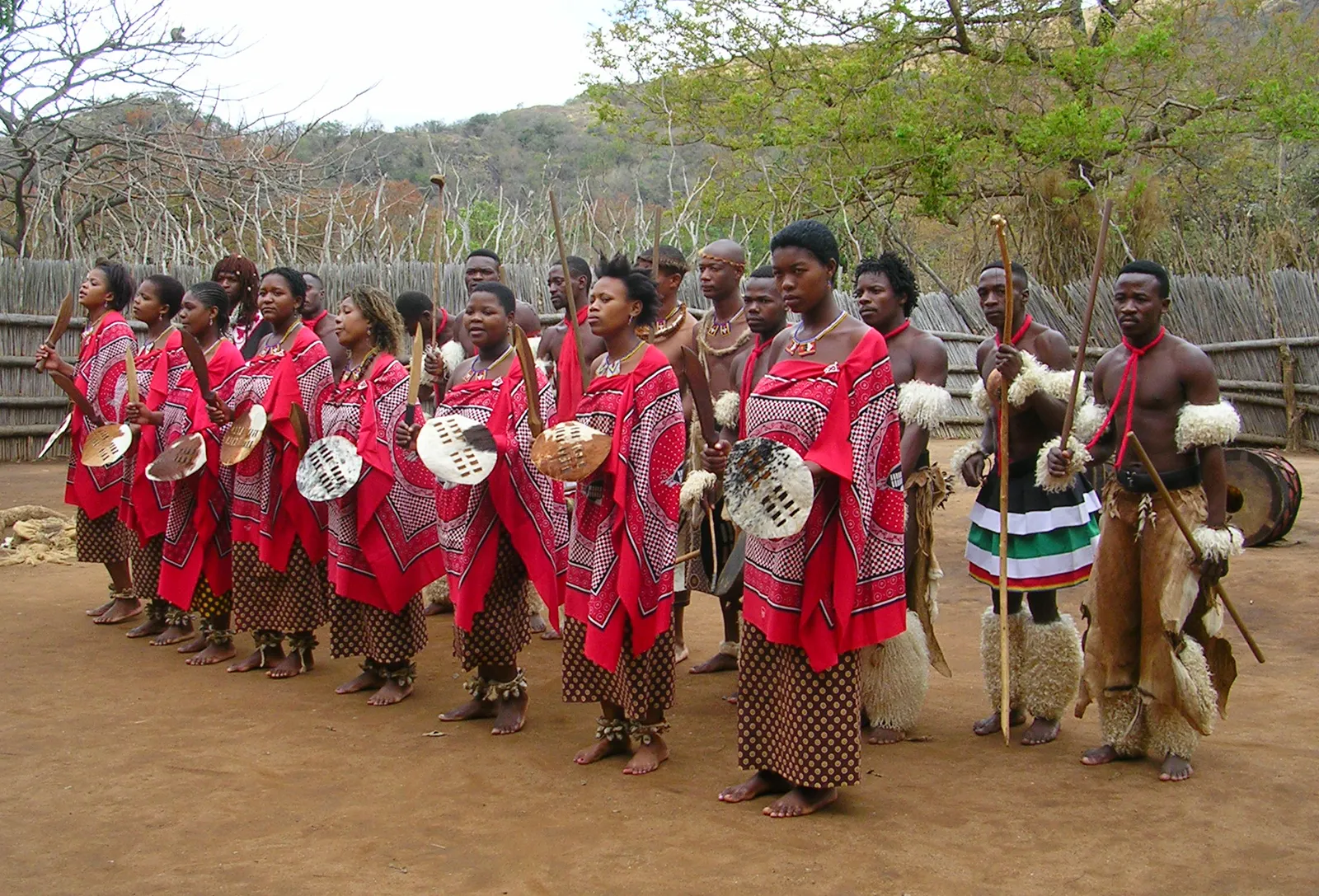
The Swati people, a Bantu-speaking ethnic group, inhabit the tree-studded grasslands of Eswatini (formerly Swaziland), the neighbouring Mpumalanga province of South Africa, and parts of Mozambique. Their culture is deeply rooted in traditions, customs, and a strong sense of community that has been preserved for generations.
Language and Identity
The Swati people speak siSwati, a Bantu language that is one of South Africa’s eleven official languages. The language is a key aspect of their identity and is used in traditional ceremonies, storytelling, and daily communication.
Traditional Attire
Swati traditional attire is vibrant and symbolic. Men often wear a cloth known as “emahiya” draped over one shoulder, along with beads and animal skins, especially during ceremonies. Women wear colourful “sidvwashi” wraps, accessorized with beads and necklaces. Married women cover their shoulders as a sign of respect, while unmarried women wear attire that reveals their shoulders.
Cultural Ceremonies and Celebrations
One of the most famous Swati cultural events is the Umhlanga Reed Dance, an annual ceremony where young maidens present reeds to the Queen Mother. This event promotes purity, unity, and the preservation of cultural values. Another significant event is Incwala, the “First Fruits” ceremony, where the king and the nation celebrate the harvest and renew their spiritual strength.
Music and Dance
Swati culture is rich in music and dance, which play a crucial role in social and religious functions. Traditional dances include the Sibhaca, a high-energy dance performed by men in rhythmic stomping movements, and the Umhlanga dance, performed by young women during the Reed Dance ceremony. Drums, rattles, and traditional string instruments accompany these performances.
Family and Social Structure
The Swati people value family and community. They practice ubuntu, a philosophy that emphasizes humanity, respect, and togetherness. Elders are highly respected, and decisions are often made collectively within extended families.
Traditional Leadership and Governance
In Swati culture, the highest traditional political, economic, and ritual powers are shared between a hereditary male ruler and his mother or a mother substitute who holds the official position of Queen Mother. This dual leadership structure ensures a balance of power and responsibilities within the society.
Cuisine and Traditional Foods
Swati cuisine is centered around natural and homegrown ingredients. Common dishes include sishwala (a thick porridge made from maize meal), emasi (fermented milk), and inyama (meat, often grilled or stewed). Traditional beer, known as umqombothi, is brewed from maize and sorghum and is commonly shared during ceremonies.
Preservation of Culture in Modern Times
Despite modernization, the Swati people continue to embrace their heritage. Many still practice traditional customs, celebrate cultural events, and pass down their language and traditions to younger generations. In South Africa, Swati culture is promoted through cultural festivals, heritage sites, and educational programs.
The Swati culture is a vibrant and enduring part of South Africa’s diverse heritage. Its rich traditions, strong sense of identity, and deep-rooted values continue to thrive, making it an essential part of the country’s cultural landscape. By embracing and preserving their customs, the Swati people ensure that their legacy remains alive for future generations.


