


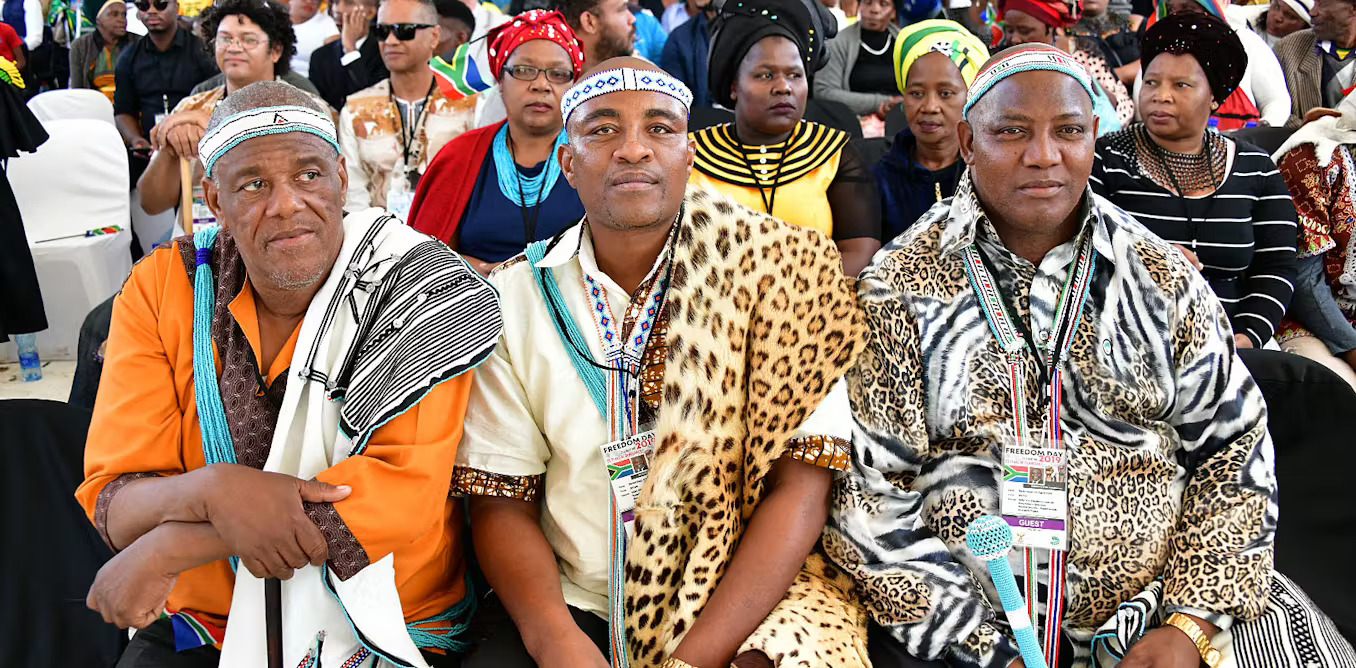
Efforts to reform South Africa’s traditional court system have encountered a setback as the legality of the Traditional Courts Bill comes into question, prompting a halt in its progression.
These traditional courts, presided over by local leaders, play a significant role in rural communities, administering justice based on indigenous customary law. While constitutionally recognized, these courts operate under outdated regulations dating back to the colonial-era Black Administration Act of 1927. Despite their informal and accessible nature, concerns have arisen regarding their jurisdiction and practices, which often exceed their intended scope.
The current pause in passing the Traditional Courts Bill stems from concerns about its constitutionality, particularly regarding the absence of provisions allowing individuals to opt out of traditional court proceedings. Under the proposed legislation, individuals would be compelled to appear before these courts, even if they dispute their legitimacy. This shift is seen as a concession to traditional leaders, potentially compromising the rights of individuals to a fair trial and equality before the law.
Mandatory attendance at traditional courts raises significant issues related to cultural rights and fairness. Historically, customary law operated on a consensual basis, with leaders deriving authority from voluntary affiliation. However, colonial and apartheid legislation imposed fixed jurisdictions on traditional leaders, disrupting the voluntary nature of customary law.
Moreover, the dominance of men in traditional court proceedings, coupled with limited access to legal representation, raises concerns about power imbalances and procedural fairness. The lack of standardized rules of evidence and procedure further complicates matters, potentially undermining individuals’ fair trial rights.
The bill’s failure to criminalize non-compliance with summonses or allow for representation in absentia provides some relief. However, the lack of a clear opt-out mechanism perpetuates unequal treatment for rural citizens, who are disproportionately affected.
While proponents argue for treating traditional courts equally with common law courts, the voluntary nature of traditional court attendance has historically distinguished them. Mimicking colonial legislation by removing the opt-out clause undermines the fundamental principles of customary law.
Concerns about “forum shopping” underscore the need for a balanced approach. While individuals should have the freedom to choose the forum that best suits their needs, coercion into traditional courts should not be enshrined in law.
As the Traditional Courts Bill approaches enactment, its constitutionality and potential infringements on cultural rights, fair trial principles, and equality remain contentious. A reevaluation of its provisions is necessary to ensure alignment with constitutional principles and the protection of individuals’ rights.
O


