


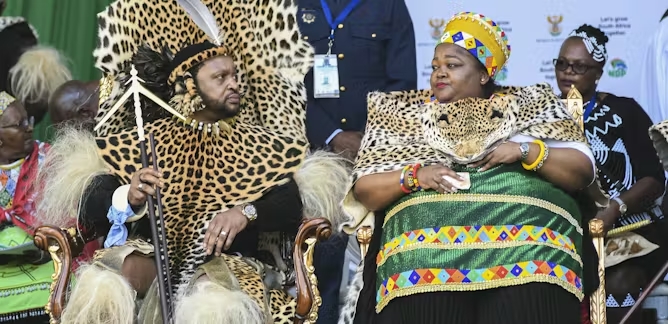
In South Africa, African monarchies play a crucial role in their communities, acting as both cultural and political figures. For the Zulu people, the royal family is deeply intertwined with indigenous customs, including marriage and divorce. Polygamy remains an accepted practice, while divorce has traditionally been discouraged. However, recent events surrounding AmaZulu King Misuzulu kaZwelithini have sparked debate about how these customs are evolving.
The king made headlines after filing for divorce from his first wife, Queen Ntokozo kaMayisela, with the intention of marrying a fourth wife. The queen challenged this by taking legal action to prevent the new marriage, citing their civil union in 2021, which legally prohibits remarriage without formal divorce. While her request was denied, the king has not yet proceeded with his new marriage.
This situation has ignited national discussions because the king is regarded as the guardian of Zulu customs. His attempt to divorce raises questions about the shifting role of indigenous laws regarding marriage and separation. To better understand these changes, we turn to Anthony Diala, an expert in African customary law.
The Zulu Royal Family and Its Influence
The Zulu monarchy traces its origins back to the 1500s and remains one of the most prominent royal lineages in Africa. The AmaZulu nation, with a population of approximately 10 million, is South Africa’s largest ethnic group, primarily residing in KwaZulu-Natal. As part of the broader Nguni people, they share linguistic and ancestral connections with other groups.
Notable figures in Zulu history include Shaka Zulu, who expanded the Zulu kingdom into a formidable empire in the early 1800s. He was succeeded by his half-brothers due to his lack of direct heirs. Later, Cetshwayo kaMpande led the Zulu forces in the Anglo-Zulu War against British colonial powers.
Today, the royal family consists of the king, his wives, and their legitimate descendants. They receive an annual government allocation of approximately $4.2 million (R77.5 million) from the KwaZulu-Natal provincial administration. Additionally, they generate revenue from land under the Ingonyama Trust, which controls around 30% of the province’s land.
King Misuzulu kaZwelithini, who ascended the throne in 2021, was raised in neighboring Eswatini and pursued education in the United States. His background makes him a modern leader navigating the intersection of tradition and contemporary influences—making his divorce case even more significant.
Divorce in Zulu Customary Law
Historically, divorce has been rare in Zulu culture. When a marriage dissolves, the wife traditionally remains part of the royal household. Zulu customary law discourages divorce because marriage is not just a union between individuals but also a binding contract between families.
In pre-colonial society, marriage arrangements involved the exchange of bridewealth (lobola), usually in livestock, from the groom’s family to the bride’s. Since families contributed to and benefited from the marriage, they played an active role in resolving conflicts to prevent separation. Divorce was considered only in extreme cases, such as witchcraft, adultery, or insanity.
A woman who maintained good standing with her husband’s family could continue living with them even after separation. However, this practice is evolving as modern laws influence indigenous customs.


